The First American Pope Took a Swing at Silicon Valley
Pope Leo XIV, the first American pope, made AI the subject of his first encyclical, Magnifica Humanitas — a 42,300-word argument that the morality of frontier technology shouldn't be set by the handful of people who own the companies building it. He's deliberately echoing Leo XIII's 1891 Rerum Novarum, which gave the world a moral vocabulary for the industrial revolution. Anthropic's Chris Olah, sitting beside him at the Vatican, agreed: the labs need guidance from outside Big Tech.
The encyclical ran 42,300 words. That alone tells you something. Popes don’t usually write that long when they’re sure of their audience. They write that long when they think the audience isn’t listening.
Pope Leo XIV — the first American to hold the office — released his first encyclical Tuesday, and he spent it on artificial intelligence. The title is Magnifica Humanitas. The argument, stripped of its Latin, is that the world needs to slow down. Not pause AI. Not ban it. Slow it down — long enough for the rest of us to figure out what it is we’re building, and whether the people building it should be the ones deciding what it’s for.
That last part is the swing.
Because Magnifica Humanitas is not really a document about machines. It’s a document about who gets to set the rules for the most powerful technology humans have ever made. And Leo’s answer is: not the people currently doing it.
He elevates AI ethics to a religious imperative — not a corporate question, not a regulatory question, but a question of what it means to be human. “A more moral A.I. is not enough,” the encyclical reads, “if that morality is determined by a few.” The line is doing a lot of work. It concedes that the labs are trying. It concedes some of them genuinely care. And then it says: that doesn’t matter. The morality of a god-tier technology can’t be set by the handful of people who happen to own the company.
There is something almost funny about who agrees with him.
The same day Leo’s encyclical dropped, Anthropic’s Chris Olah — one of the co-founders of one of the frontier AI labs — was sitting next to the pope at the Vatican rollout. Olah told reporters that AI must be guided from outside Big Tech: by religious leaders, governments, civil society. Frontier labs, he said, operate under incentives “that can sometimes conflict with doing the right thing.” This is a co-founder of a frontier lab, sitting in the Vatican, telling the pope he’s right. The argument is no longer coming only from outside the industry. It’s coming from inside, too, and the inside has gone looking for help.
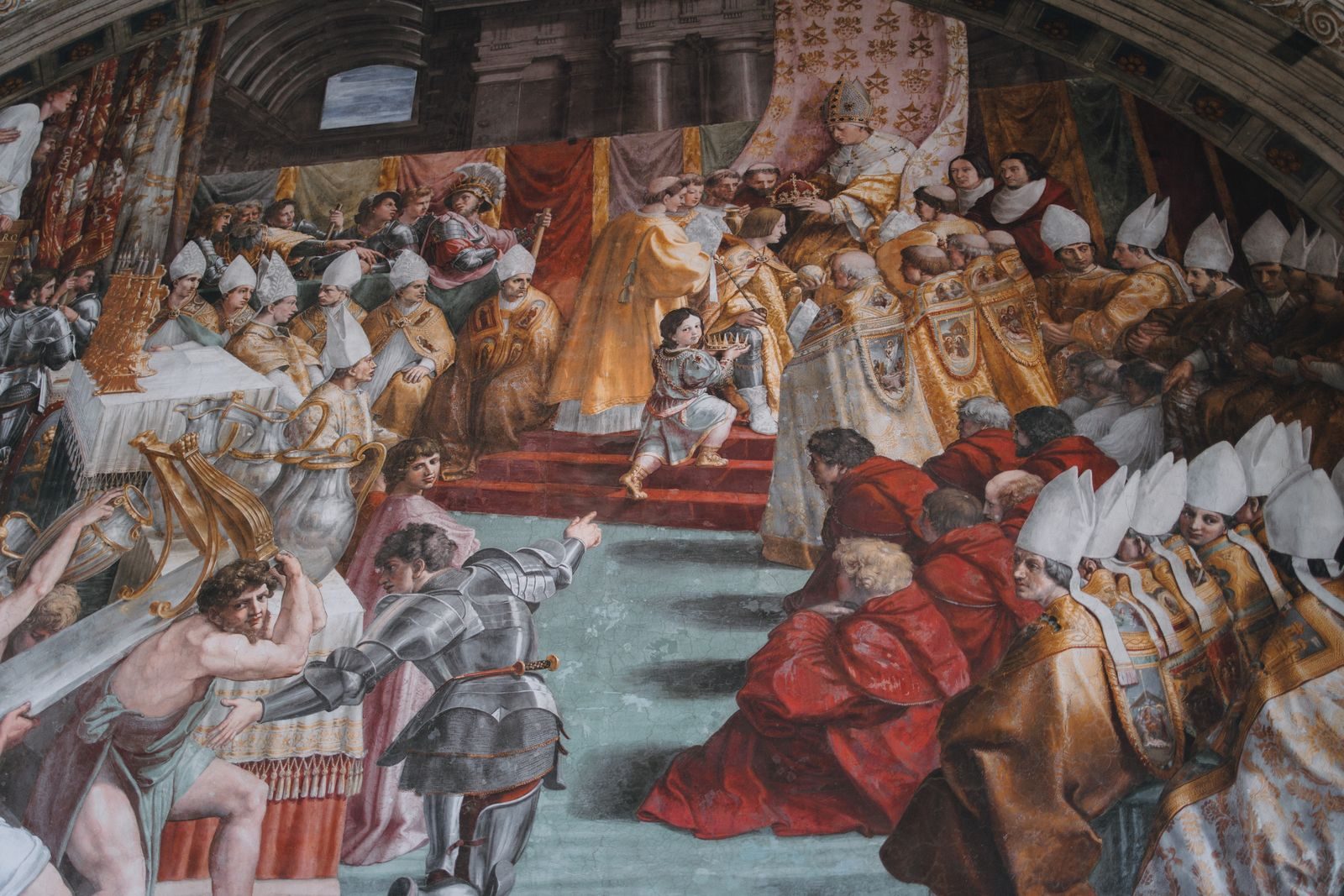
To understand why a pope is the one delivering this message, you have to look 134 years back.
In 1891, another Pope Leo — the thirteenth — wrote an encyclical called Rerum Novarum. It was the church’s first serious confrontation with the industrial revolution: with factories, with mass labor, with the new economic powers that had outgrown every institution meant to check them. Rerum Novarum didn’t stop industrialization. It did something more interesting. It gave the Catholic Church a moral language for the modern economy — workers’ rights, fair wages, the dignity of labor — that politicians, unions, and reformers borrowed for the next century.
Leo XIV is, by name and by intention, doing the same thing for AI. Magnifica Humanitas echoes its predecessor so deliberately that scholars noticed within hours. The bet is that the church can shape the moral vocabulary of a technological era before the technology finishes shaping us.
Then there is the matter of who Leo is.
He is the first American pope. He spent decades in the United States. He knows, in a way his predecessors did not, exactly what Silicon Valley is — its self-image, its theology of progress, its conviction that whatever it ships next is the thing that finally makes the world better. Choosing AI as the subject of his opening encyclical wasn’t an abstract gesture. It was a target. An American pope, picking a fight with the most powerful American industry, in his first official act. The geometry of that is hard to miss.
He picked a second fight the same day. Leo issued a historic apology for the Vatican’s role in legitimizing slavery, specifically for the fifteenth-century papal bulls that gave moral cover to European colonization and the slave trade. Two confrontations in one day, both arguing the same thing: the church has been wrong before about the powers of its age, and it intends to be early this time.
Will the swing land?
Rerum Novarum worked because it gave the world’s moral imagination something to do with industrial capitalism — a way to think about workers as human, factories as moral spaces, profit as a question rather than an answer. Magnifica Humanitas is trying the same trick on a technology that moves faster than any institution can metabolize, including the Vatican. The frontier labs ship every six months. Encyclicals come once a papacy. The asymmetry is real.
But the asymmetry was real in 1891 too. Factories also moved faster than the church. The church wrote anyway. And the language stuck, because the moment was a moment, and somebody named it.
What Leo did Tuesday was name this one.
The pitch is not that the church will regulate AI. The church can’t regulate anything. The pitch is that the conversation about what AI is for has been happening inside a handful of buildings in northern California, and that this is not where it should happen, and that the rest of the world — religious, civic, governmental, ordinary — needs a vocabulary to enter the room.
Forty-two thousand three hundred words is a long way of saying: show up.