The Old Europe Is Closing. The New One Is Hiring.
Europe's recession headlines (services PMI at 46.4, growth cut to 0.9%) capture a real contraction in the old economy — petrol cars, generic chemicals, discretionary services. But underneath, EV sales are up 34%, defense spending hit a Cold War high of $864B, and AI capex is pouring into French data centers and German supply chains. It isn't recovery or collapse — it's a transfer from the old shell to a new one forming inside it.
Pick a German car dealer at random and ask how business is going. A year ago, a third of his walk-ins asked about petrol cars. Today, it’s sixteen percent. Half the conversation, gone. He’ll tell you the showroom feels quieter — and across Europe, that quiet has a number. Services PMI hit 46.4 in May, the sharpest contraction since the depths of the pandemic. Factories are five months into headcount cuts. The European Commission just trimmed its 2026 growth forecast to 0.9%, with inflation still pointing somewhere between three and four percent.
That’s a recession. Or the headline of one. Most reporters are leaving it there.
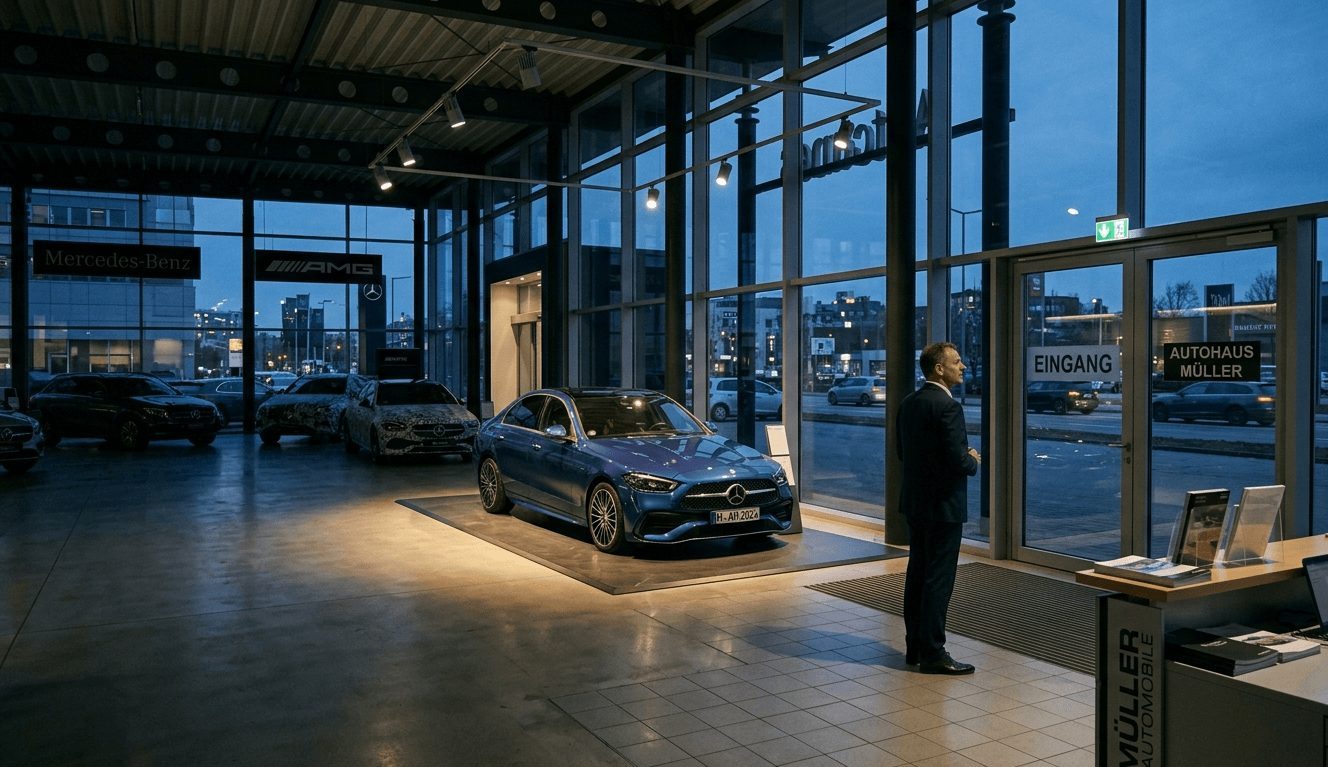
Walk down the road, though, and the picture stops making sense. In the same markets where petrol VWs are dying on the lot, EV registrations are up 34% year-on-year across sixteen European countries. Half of Renault’s UK registrations are electric. Volvo’s small EX30 is flying off shelves. Volkswagen itself has stopped pretending and openly talks about “structural overcapacity” in its combustion plants. The car money didn’t disappear. It just walked across the showroom.
That same shrug-and-rotate is happening at altitude. European military spending reached $864 billion in 2025, up 14% — the highest level since the Cold War ended. Germany is past 4% of GDP and aiming for five. TKMS, the shipyard that builds Germany’s submarines, is sitting on a record $24 billion order book. The Pentagon is now in conversations with European carmakers — Mercedes-Benz among them — about retooling factories for arms. When Carlyle’s CEO calls the defense opportunity “unlimited”, and private equity uses that word, they usually mean it.
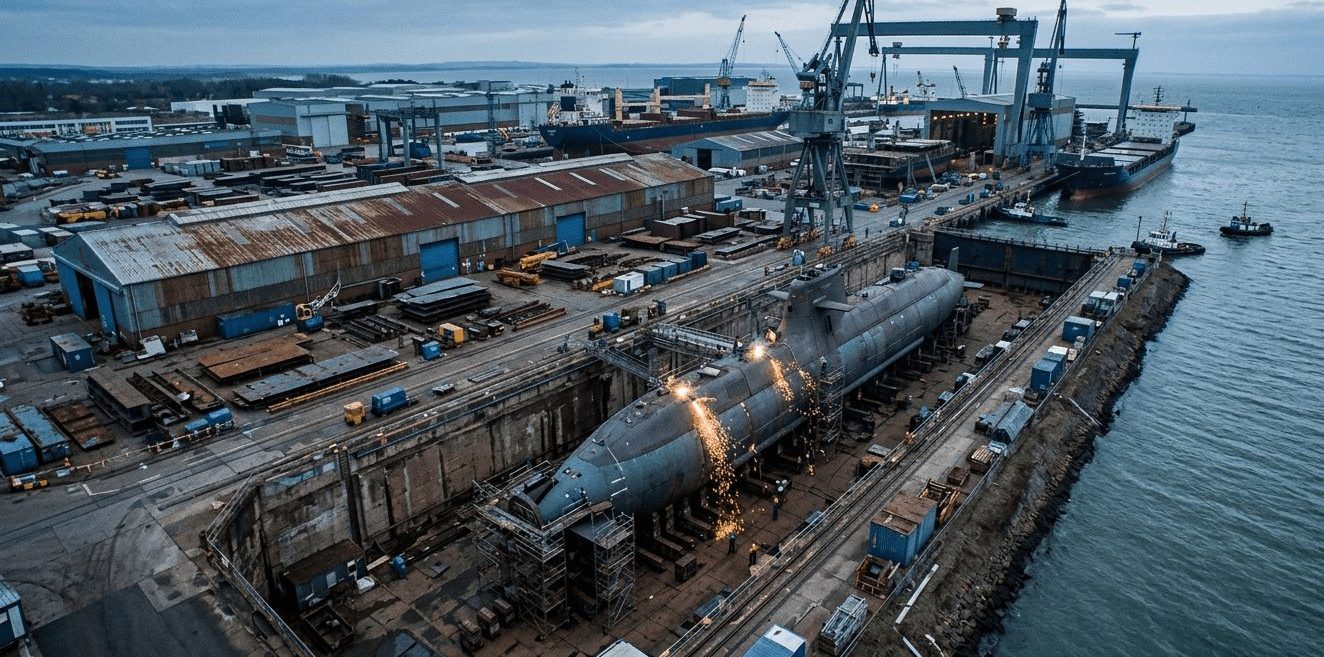
So the same households who can’t afford to eat out are watching their tax money build submarines. That isn’t a recovery. It also isn’t a collapse. It’s a transfer.
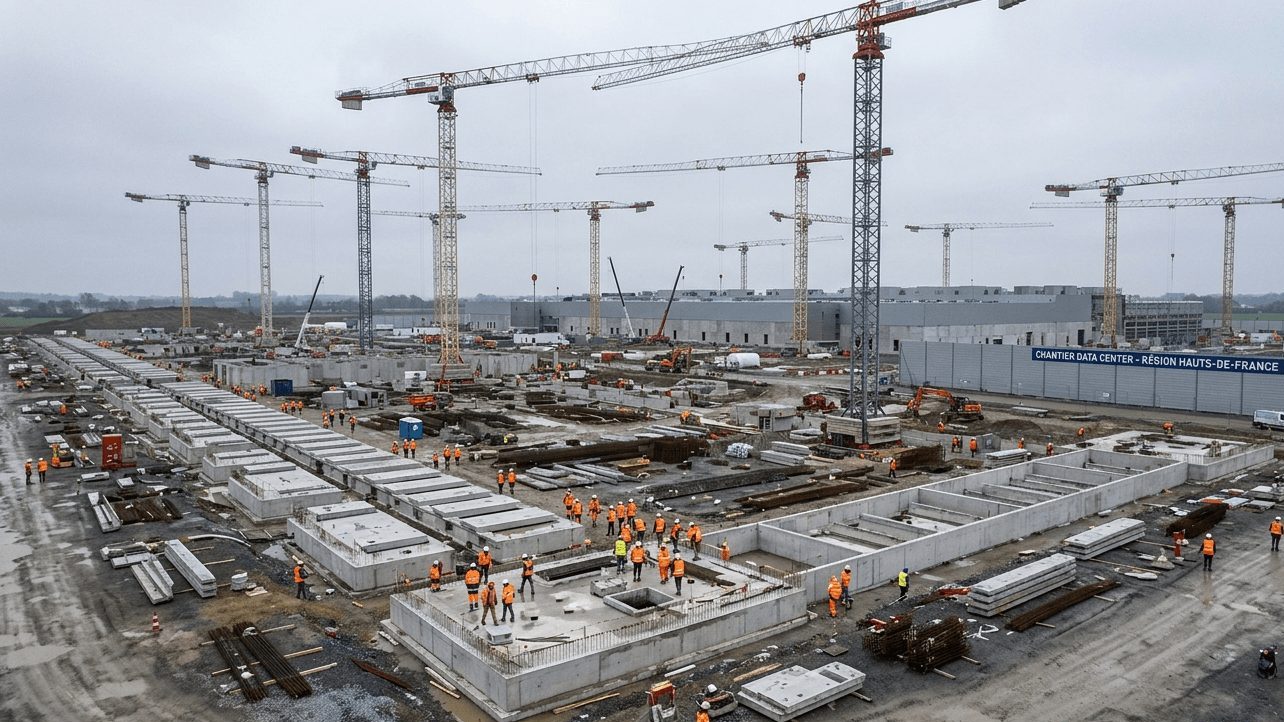
Then there’s the part European headlines mostly miss, because the chips and the share prices are American. Global AI capex is on track for roughly $800 billion this year, heading toward a trillion by 2027. That money has to land somewhere — and increasingly, that somewhere is Europe. France pulled in €93 billion in pledges at this year’s Choose France summit; nearly half of it was SoftBank data-center infrastructure. Munich just got a robotaxi pilot. None of this shows up in the PMI yet. But every data hall is an order for German cooling, French concrete, and Polish electricians — quiet construction jobs that didn’t exist five years ago.
Even Europe’s old chemical giants are catching a strange tailwind. BASF, Lanxess and Evonik are reporting better conditions — not because demand came back, but because their Asian rivals depend on Middle East feedstock and just lost it. Customers are switching to European chemistry for reliability. The executives keep insisting it’s temporary. But temporary is exactly the window in which supply chains get rewired, and switching back is friction nobody wants to deal with later.
None of which makes the recession headline wrong. Real incomes are getting crushed. Services are bleeding. Almost two years of falling factory employment is real pain for real people, and pretending otherwise is what gets a government voted out.
What the headline is measuring, though, is the old shell: petrol plants, generic chemicals, discretionary spending. It isn’t yet measuring the shape forming inside it — EV lines, defense yards, data halls, and the supply chains that feed them. Different jobs in different places, often hiring while the old ones lay off in the same week, in the same town.
Europe in 2026 looks like a continent in recession. It might just be a continent halfway through changing clothes.